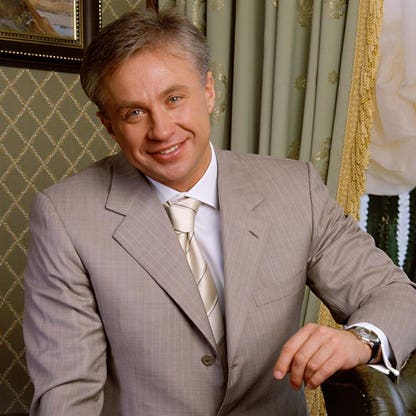
The Precipitous Decline: Unpacking Yuriy Kosiuk's Net Worth in the Shadow of War by 2015
The year 2014 marked a dramatic turning point for Ukraine, unleashing a cascade of political, social, and economic upheavals that profoundly reshaped the nation. Among the most visible manifestations of this turmoil was the significant contraction of wealth among its most powerful business magnates. While the broader geopolitical implications garnered global headlines, the financial impact on individual titans of industry, such as Yuriy Kosiuk net worth, presented a stark indicator of the burgeoning crisis. By mid-2015, just over a year into the conflict, the combined fortunes of Ukraine's top five wealthiest individuals had nearly halved, signaling an unprecedented economic shockwave.
This article delves into the specific circumstances surrounding the drastic reduction in the net worth of Yuriy Kosiuk and his peers. We will explore the economic environment preceding the conflict, the immediate and sustained impacts of the Russo-Ukrainian War on Ukraine's economy, and how these broader trends directly contributed to the re-evaluation of Yuriy Kosiuk's fortune.
Ukraine's Pre-War Economic Landscape: A Foundation for Wealth
Before the tumultuous events of 2014, Ukraine's economy, while often volatile and susceptible to political influence, had allowed certain individuals to amass significant wealth. This era saw the rise of a distinct class of oligarchs, who leveraged privatized assets, natural resources, and strategic industries to build vast financial empires. Figures like Rinat Akhmetov, Viktor Pinchuk, Ihor Kolomoyskyi, Henadiy Boholyubov, and Yuriy Kosiuk were at the apex of this economic structure.
Yuriy Kosiuk, in particular, had established himself as a dominant force in the agro-industrial sector. His company, Myronivsky Hliboproduct (MHP), had grown into Ukraine's largest producer of poultry and a major player in grain cultivation and processing. MHP's success was built on a vertically integrated model, controlling everything from feed production to meat processing and distribution, a strategy that allowed it to thrive in both domestic and international markets. This robust business model propelled Kosiuk into the top echelons of Ukrainian wealth, with his net worth reflecting the scale and profitability of his agricultural empire.
The collective net worth of these five leading oligarchs stood at a staggering $21.6 billion in 2014. This figure represented not just personal wealth, but also significant control over key sectors of the Ukrainian economy, ranging from metallurgy and energy to media and finance, alongside Kosiuk's agricultural stronghold. Their prosperity was intricately linked to the nation's economic stability, making their subsequent financial reversals a powerful barometer of the country's overall decline.
The War's Immediate Economic Fallout: A Collective Decline
The annexation of Crimea in March 2014, followed by the escalating conflict in eastern Ukraine, marked a severe turning point. The initial shockwaves reverberated across all sectors of the economy, causing widespread instability and uncertainty. Investor confidence evaporated, capital flight intensified, and the national currency, the Hryvnia, began a precipitous devaluation against major global currencies. These factors, compounded by the direct loss of territory and infrastructure in conflict zones, created an unprecedented economic crisis.
By June 2015, the financial impact was starkly evident. The combined net worth of the five richest Ukrainians—Akhmetov, Pinchuk, Kolomoyskyi, Boholyubov, and Kosiuk—had plummeted from $21.6 billion in 2014 to a mere $11.85 billion. This represented a colossal loss of $9.75 billion in just over a year, a testament to the destructive power of war on established wealth. This drastic reduction was not merely a superficial dip; it reflected a fundamental re-evaluation of asset values, market access, and future earning potential under conditions of extreme duress. For a detailed breakdown of this collective blow, read more about the Russo-Ukrainian War: $9.75 Billion Blow to Oligarch Wealth.
Yuriy Kosiuk Net Worth: Analyzing the Agro-Industrial Impact
While the overall decline was shared among the top five, the specific factors influencing Yuriy Kosiuk net worth were closely tied to the vulnerabilities of the agro-industrial sector during wartime. MHP, Kosiuk's flagship company, faced a multitude of challenges:
- Disruption of Supply Chains: The conflict in eastern Ukraine severely hampered logistics, making it difficult to transport feed, raw materials, and finished products. Roads were damaged, checkpoints proliferated, and general insecurity made regular operations arduous and expensive.
- Loss of Markets: The domestic market suffered from reduced purchasing power due to inflation and widespread unemployment. Export markets, particularly those relying on Black Sea routes, faced increased risks and higher insurance costs, impacting profitability.
- Currency Devaluation: A significant portion of MHP's revenues and expenses were tied to the Hryvnia. As the national currency depreciated sharply, the dollar-denominated value of Kosiuk's assets and earnings diminished considerably. This was a critical factor in the reassessment of his wealth by international financial observers.
- Investor Sentiment: Foreign investment in Ukraine, crucial for capital-intensive industries like agriculture, dried up almost entirely. The perceived risk associated with operating in a conflict zone made it exceedingly difficult to attract new capital or maintain existing investor confidence, further pressuring MHP's valuation and, consequently, Yuriy Kosiuk's personal net worth.
- Operational Risks: While MHP's primary operations were not directly in the conflict zone in 2014-2015, the pervasive uncertainty and threat of expansion created an environment of high operational risk, forcing increased security spending and contingency planning.
For Kosiuk, whose wealth was largely consolidated in MHP, these challenges translated directly into a significant reduction in his estimated net worth. The valuation of his publicly traded company, a primary component of his wealth, inevitably reflected the grim realities of the war-torn economy.
Beyond the Numbers: Broader Economic Implications and Survival Strategies
The dramatic reduction in the wealth of individuals like Yuriy Kosiuk by 2015 underscored a deeper transformation occurring within the Ukrainian economy. It highlighted the fragility of wealth accumulated in unstable political environments and the critical importance of resilience and adaptability in times of crisis.
For businesses operating in such high-risk environments, several lessons emerged:
- Diversification and Geographic Spread: Companies with operations diversified across different regions or even countries were better positioned to absorb localized shocks. Relying heavily on one market or geographic area proved extremely risky.
- Strong Balance Sheets: Companies with less debt and ample cash reserves were better equipped to weather prolonged periods of economic downturn, currency volatility, and disrupted cash flows.
- Adaptable Business Models: The ability to quickly pivot, find alternative supply chains, or explore new markets became paramount. Rigidity in operations often led to significant losses.
- Government Relations and Advocacy: While sometimes contentious, maintaining effective communication channels with government bodies could be crucial for navigating new regulations, accessing support, or influencing policy during crises.
The period immediately following 2014 was not just about wealth destruction; it was also a crucible for new economic realities, forcing Ukrainian businesses and oligarchs to reassess their strategies for survival and future growth in a vastly altered landscape.
Conclusion
By 2015, the impact of the Russo-Ukrainian War on Ukraine's economic elite was undeniable and profound. The nearly $10 billion drop in the collective net worth of the nation's five richest individuals, including the significant reduction in Yuriy Kosiuk net worth, served as a stark financial barometer of the conflict's devastating reach. Kosiuk, a titan of the agro-industrial sector, saw his fortune recalibrated by the realities of disrupted supply chains, currency devaluation, and shattered investor confidence, reflecting a broader national struggle for economic stability.
This period highlights how geopolitical events can rapidly dismantle accumulated wealth, fundamentally altering the economic power dynamics within a nation. While the numbers from 2015 paint a picture of severe decline, they also set the stage for the subsequent years of adaptation, struggle, and eventual, albeit slow, recovery, as Ukrainian businesses and their leaders grappled with a new, challenging paradigm.
