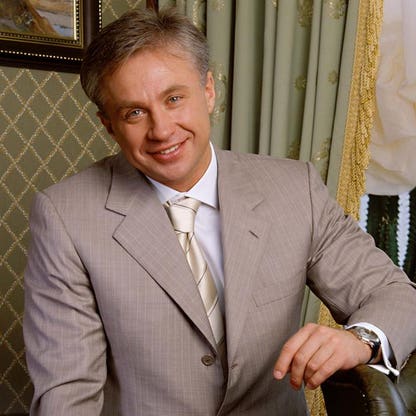
Yuriy Kosiuk's Fortune: Tracking the Post-2014 Decline Amidst Geopolitical Turmoil
The landscape of wealth in Ukraine underwent a dramatic transformation following the tumultuous events of 2014, with prominent figures like Yuriy Kosiuk experiencing significant shifts in their financial standing. Once symbols of Ukraine's post-Soviet economic development, many of the nation's most powerful oligarchs saw their fortunes diminish substantially as geopolitical conflicts and economic instability gripped the country. This article delves into the factors that contributed to the decline in
Yuriy Kosiuk net worth and that of his peers, dissecting the immediate impacts and long-term repercussions of the Russo-Ukrainian War.
Before 2014, Ukraine's economy was largely shaped by a handful of influential individuals who had amassed immense wealth through the privatization of state assets and control over key industrial sectors. Yuriy Kosiuk, founder and CEO of Myronivsky Hliboproduct (MHP), Ukraine's largest agricultural holding, was a prime example of this success. MHP, primarily known for its poultry production, had grown into a vertically integrated agro-industrial giant, spanning everything from feed production to meat processing and sales, making Kosiuk one of the wealthiest men in the country. His fortune, like that of other oligarchs, was deeply intertwined with the stability and prosperity of the Ukrainian economy. The subsequent conflict, however, would prove to be an unprecedented challenge, redefining the parameters of wealth accumulation and preservation in the region.
The Golden Era: Oligarchic Wealth Before 2014
For decades leading up to the 2014 crisis, Ukraine’s economic narrative was often told through the lens of its oligarchs. Figures like Rinat Akhmetov, Viktor Pinchuk, Ihor Kolomoyskyi, Henadiy Boholyubov, and Yuriy Kosiuk built vast empires in sectors ranging from metallurgy and energy to banking and agriculture. Their business models often relied on favorable political connections, access to natural resources, and control over strategic industries, which allowed them to consolidate immense power and wealth. Yuriy Kosiuk's ascent was particularly notable for its focus on agriculture, a sector that represented Ukraine's historical strength and future potential as the "breadbasket of Europe." MHP's expansion into new markets and its modern production facilities positioned Kosiuk as a forward-thinking entrepreneur in a vital industry.
By 2014, these five individuals collectively commanded an estimated net worth of $21.6 billion. This staggering sum reflected years of unhindered growth, successful market penetration, and a relatively stable, albeit often opaque, business environment. Their diversified portfolios and extensive networks provided a semblance of resilience. However, this facade of invincibility was about to be shattered by external forces that neither political influence nor financial might could entirely mitigate. The annexation of Crimea and the conflict in eastern Ukraine would expose the inherent vulnerabilities of wealth concentrated within a volatile geopolitical zone, fundamentally altering the trajectory of their fortunes, including the trajectory of
Yuriy Kosiuk net worth.
The 2014 Turning Point: War's Immediate Economic Devastation
The year 2014 marked a profound turning point for Ukraine, not only politically but also economically. The annexation of Crimea by Russia and the outbreak of hostilities in Donbas sent shockwaves through the nation's economy, leading to a dramatic depreciation of the national currency, significant capital flight, and the direct loss of assets in occupied territories. For the collective fortunes of Ukraine's wealthiest individuals, the impact was immediate and severe.
Between 2014 and June 2015, the combined net worth of the top five Ukrainian oligarchs – Rinat Akhmetov, Viktor Pinchuk, Ihor Kolomoyskyi, Henadiy Boholyubov, and Yuriy Kosiuk – plummeted from an estimated $21.6 billion to $11.85 billion. This represented an staggering loss of nearly $9.75 billion, a testament to the brutal economic consequences of armed conflict. This collective downturn underscores the vulnerability of even the most robust business empires when faced with such unprecedented geopolitical instability. The magnitude of this financial hit is further elaborated in our related analysis,
Russo-Ukrainian War: $9.75 Billion Blow to Oligarch Wealth.
Yuriy Kosiuk's MHP: A Sector Under Siege
For Yuriy Kosiuk, whose fortune was intrinsically linked to MHP, the agricultural sector faced unique challenges. While MHP's core operations were largely in central and western Ukraine, away from the immediate front lines in Donbas and Crimea, the broader economic fallout still had significant repercussions. Key impacts included:
- Currency Devaluation: The sharp decline of the Ukrainian hryvnia against the U.S. dollar severely eroded the dollar value of domestic assets and revenues. While MHP had significant export revenues, its operational costs and domestic asset values were still affected.
- Disrupted Supply Chains: Even without direct conflict, the war created immense logistical hurdles. Traditional trade routes were jeopardized, and the overall instability complicated the movement of goods, affecting both inputs (like imported feed components) and outputs (exports to foreign markets).
- Investment Climate Deterioration: Foreign direct investment, crucial for MHP's ambitious expansion plans, dried up almost overnight. Investor confidence was shattered, making it difficult to secure capital for growth or even maintain existing operations at pre-war levels.
- Increased Operational Costs: Enhanced security measures, insurance premiums in a conflict zone, and the general uncertainty contributed to higher operational expenditures.
- Loss of Markets: The annexation of Crimea and the conflict in Donbas meant the direct loss of significant domestic consumer markets within those regions, which MHP previously served.
These factors, combined with a general economic recession, directly impacted MHP's profitability and market valuation, consequently diminishing Yuriy Kosiuk net worth. The agricultural sector, though often seen as resilient, proved to be highly susceptible to the disruptions caused by armed conflict and political instability.
Beyond the Billions: Long-Term Repercussions and Adaptation Strategies
While the initial drop in 2014-2015 was stark, the challenges for Ukrainian oligarchs, including Yuriy Kosiuk, extended far beyond the immediate aftermath. The war initiated a period of sustained economic hardship and pressure for structural reforms. For those whose wealth was rooted in Ukraine, the imperative shifted from expansion to preservation and adaptation.
Many oligarchs were forced to reassess their business models. Some attempted to diversify their holdings geographically, seeking safer havens for investment outside Ukraine. Others focused on optimizing existing operations, cutting costs, and enhancing efficiency to weather the storm. For MHP, Kosiuk led efforts to strengthen its position as a global exporter, leveraging Ukraine's fertile lands and relatively lower production costs to compete in international markets, particularly the EU and the Middle East. This strategic pivot was crucial for mitigating domestic market volatility and bolstering the company's financial resilience in the face of ongoing uncertainty. The company has also pursued IPOs on international exchanges, seeking foreign capital and greater transparency.
The Broader Economic Landscape: Ukraine's Struggle and Resilience
The decline in oligarchic wealth was a reflection of the broader national economic struggle. Ukraine’s GDP contracted sharply, inflation soared, and the national currency lost a significant portion of its value. The conflict also spurred a renewed push for anti-corruption reforms and de-oligarchization, with the government and international partners striving to reduce the undue influence of powerful business magnates on political and economic life.
These reforms, while necessary for long-term stability and integration with Western economies, often created additional pressures for the oligarchs. Greater transparency requirements, stricter regulatory oversight, and efforts to dismantle monopolies challenged traditional ways of doing business. For Kosiuk and MHP, this meant navigating an evolving regulatory environment while simultaneously dealing with the operational challenges of a nation at war. The resilience of the Ukrainian people and certain economic sectors, however, also offered glimmers of hope. Agriculture, despite its vulnerabilities, remained a critical engine for the economy, underscoring the enduring importance of companies like MHP.
Understanding the Decline: Multifaceted Factors at Play
The significant reduction in
Yuriy Kosiuk net worth and that of his peers was not solely attributable to the immediate effects of the Russo-Ukrainian War. It was a confluence of several interrelated factors:
- Direct War Impact: Loss of assets, market access, and infrastructure in occupied territories (Crimea, parts of Donbas).
- Macroeconomic Instability: Currency devaluation, high inflation, and a severe economic recession across Ukraine.
- Investor Confidence Crisis: A sharp decline in foreign and domestic investment due to heightened geopolitical risk.
- Global Commodity Price Fluctuations: While MHP's core product is food, global commodity prices (e.g., grain, energy) still influence costs and revenues.
- Domestic Reforms and De-oligarchization Efforts: Government initiatives aimed at increasing transparency, combating corruption, and reducing monopolistic practices, which challenged established business models.
- Shift in Business Environment: A move towards greater integration with European standards and a more competitive marketplace.
These factors created a perfect storm that severely impacted the asset valuations and operational profitability of major Ukrainian enterprises. While the war was the primary catalyst, the subsequent economic and political transformations ensured that the pre-2014 business environment would never fully return.
Conclusion
The period following 2014 served as a stark reminder of how deeply wealth is intertwined with political stability and economic health. The dramatic decline in Yuriy Kosiuk's net worth, alongside that of other prominent Ukrainian oligarchs, reflects the profound and costly impact of the Russo-Ukrainian War. The collective loss of nearly $9.75 billion for the top five wealthiest Ukrainians between 2014 and 2015 highlighted the immediate financial devastation. For Kosiuk's MHP, navigating currency devaluation, disrupted supply chains, and a collapsing investment climate became paramount.
Beyond the initial shock, the ongoing conflict and subsequent reform efforts compelled these business leaders to adapt, diversify, and seek new strategies for survival and growth in a challenging new reality. The story of
Yuriy Kosiuk net worth serves as a compelling case study of economic resilience and vulnerability in the face of geopolitical conflict, demonstrating how even vast fortunes can be significantly eroded when peace and stability are undermined. The future trajectory of these fortunes remains closely tied to Ukraine's ultimate economic recovery and its successful integration into the global economy.